
A push pin map does something a phone gallery rarely manages: it turns scattered trips into a living object that can be seen from across the room. One glance at a wall-sized map, and a weekend in Lisbon, a delayed train through northern Italy, or a family summer in Quebec suddenly feels close again. That is why these pieces have become far more than practical trackers. They sit at the crossroads of travel map decor, storytelling, and everyday nostalgia, giving old journeys a fresh visual life while quietly feeding the next round of travel inspiration.
The charm lies in the mix of order and emotion. A well-designed interactive map can hold precise routes, dates, and destinations, yet still feel warm and personal. Some travelers mark 12 countries in a single color, others use 7 shades to separate solo escapes, honeymoon stops, family road trips, and work-related flights. Add a small label beside Kyoto, a photo near Cape Town, or a handwritten note by Buenos Aires, and the wall starts speaking. The best world map ideas are the ones that make guests pause, smile, and ask for the story behind a single pin.
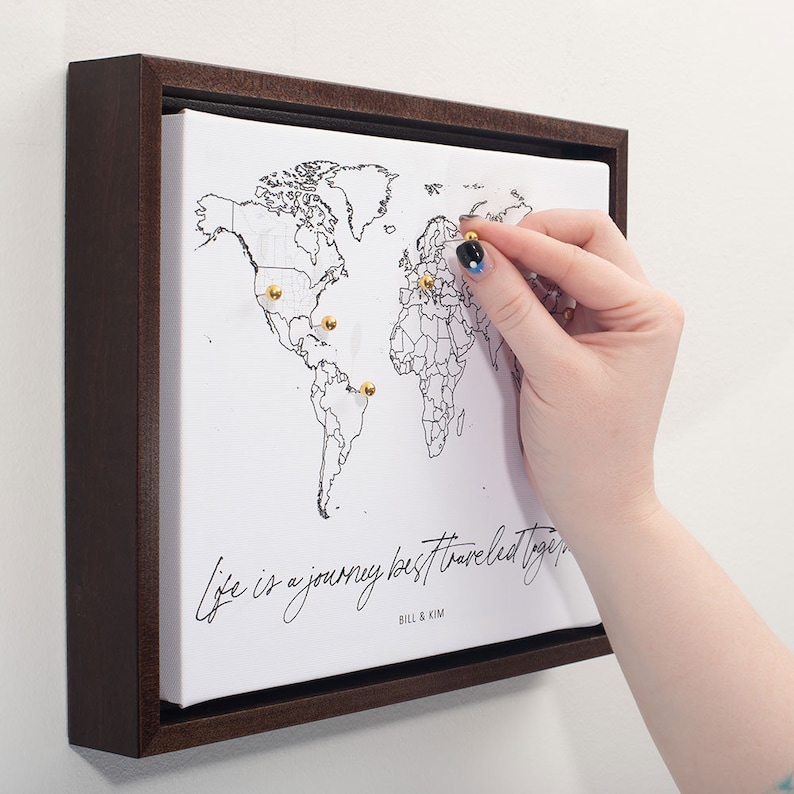
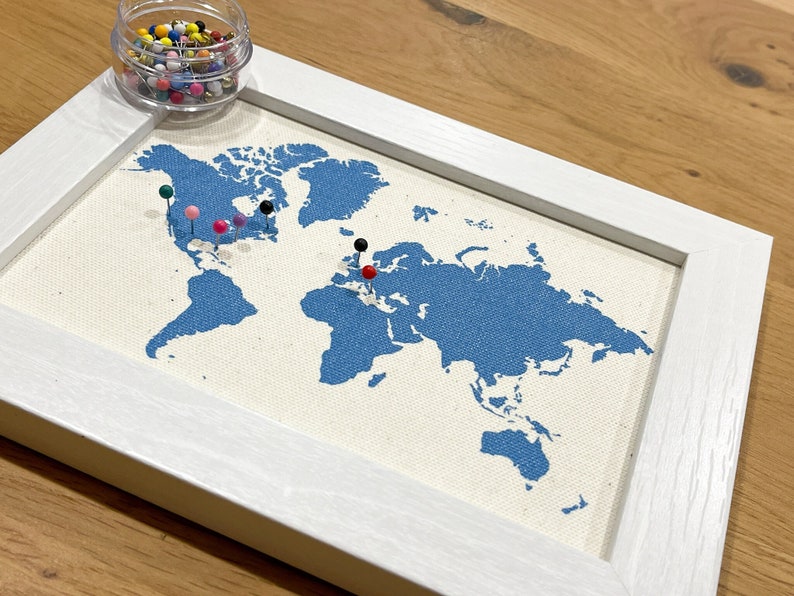
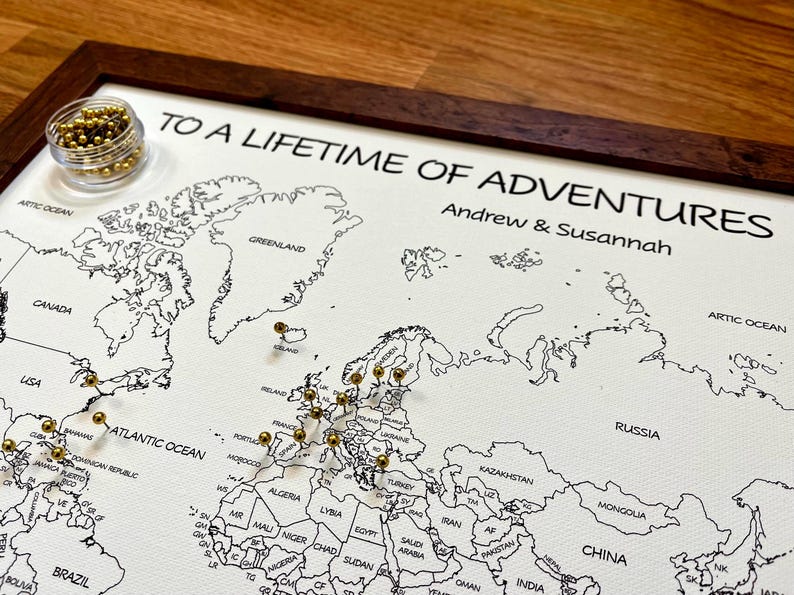
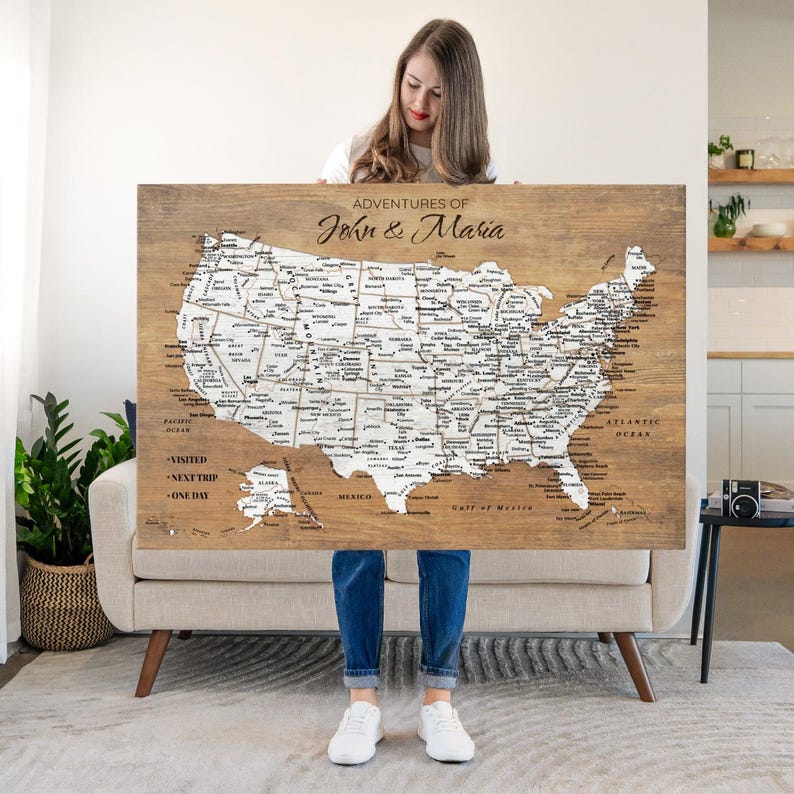
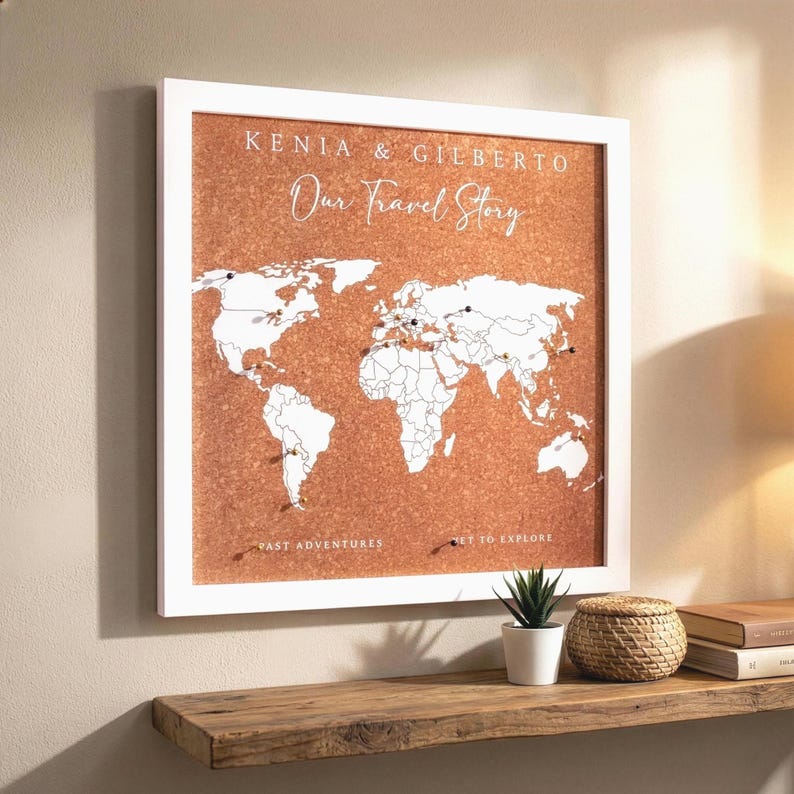
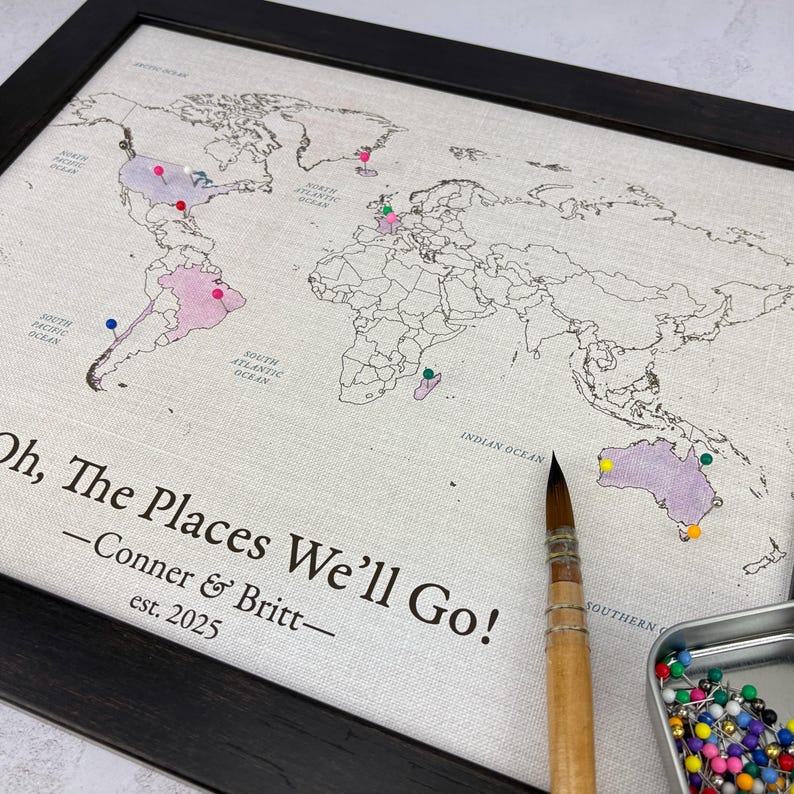
Push pin world map ideas for turning travel memories into visual stories
The smartest way to use a memory map is to think beyond the basic “been there” marker. A pin can show where a trip began, where something unforgettable happened, or where a plan changed completely. That last category matters more than people expect. A missed ferry in Greece, a surprise snowstorm in the Alps, an unexpected street festival in Mexico City, these detours often become the best stories on the wall. Marking only capitals can feel tidy, but marking meaningful places feels alive.
Color coding gives structure without draining the fun out of the display. Red pins can represent romantic getaways, deep blue can stand for long-haul adventures over 10 days, yellow can mark trips with children, and green can identify places travelers want to revisit within 24 months. This kind of system keeps the map readable, especially once the pin count climbs past 40 or 50. One household in Lyon used 5 colors and discovered that nearly half of their most treasured stops came from trips under 4 days, which changed how they planned future breaks. That is the sort of insight a digital list rarely reveals so clearly.
There is also room for playful design. Some maps look striking when the pins form loose clusters around personal “eras,” such as student travels, newlywed journeys, or retirement adventures. Others become stronger pieces of map art when routes are connected with thin thread or subtle drawn lines. A route from Madrid to Marrakech to Essaouira can become a visual sweep rather than three isolated dots. A transatlantic honeymoon route, pinned and linked in soft brass and ivory, often looks more elegant than a heavy block of identical colors.
Small accessories elevate the experience. Tiny tags can hold a date like 14 April 2024, a detail such as “best market lunch, 9 euros,” or a note reading “rain for 3 days, still worth it.” Those imperfect details make the display human. Around the map, a short quote, a museum ticket, or a 6 by 4 inch photo can turn a plain board into personalized travel history. The result is simple but powerful: every pin stops being a dot and starts becoming a scene.
That visual storytelling becomes even richer once the format of the map itself enters the equation.
Best map formats for push pin travel displays and creative travel map decor
The format changes everything. A paper print under glass can look refined, but it works best when designed for surface marking rather than deep pinning. A cork-backed board, on the other hand, invites constant updates and has a tactile charm that suits active households. For a den, hallway, or guest room, a framed canvas often strikes the best balance between decoration and function. It feels polished enough to stand on its own, yet still welcomes frequent additions. Reviews in recent years often praise vibrant color, clear place names, and customization, though some buyers have noted scratched or lightweight frames on arrival. That makes material quality worth checking before buying, especially for larger pieces above 36 inches wide.
Projection matters too, even if many casual travelers ignore it at first. Mercator maps are familiar and easy to read, which helps when pinning routes quickly. Winkel Tripel projections tend to feel more balanced visually, with less distortion across continents, which can make the whole display more elegant in a living space. On a wide wall, that difference is noticeable. A family choosing between the two after comparing samples often finds that Mercator feels practical, while Winkel Tripel feels calmer and more design-forward.
Magnetic versions offer another route entirely. They are excellent for renters who do not want to punch dozens of holes into a board over time, and they are surprisingly handy for swapping seasonal themes. Summer trips can be highlighted from June to August, winter escapes from December to February, then rearranged without damage. Cork maps remain the better option for layered accessories, though, because they can hold tags, mini postcards, and lightweight keepsakes much more securely.
Placement deserves real thought. A large map in a narrow corridor can feel cramped and unreadable, especially if pins sit too close together around Europe or Southeast Asia. It usually works better above a sideboard, in a dining area, or on a study wall where people can stand about 60 to 90 centimeters away and actually read the details. Direct afternoon sun is another common mistake, since it can fade printed colors faster than expected. Good visibility, soft lighting, and enough surrounding space turn the piece from a novelty into a true centerpiece. A travel wall should not be hidden in a dark corner, it should spark conversation before the coats even come off.
Once the right format is on the wall, the next step is making it evolve rather than letting it freeze after the first exciting week.
How a personalized travel memory map can grow with family stories and future adventures
The most successful push pin travel displays are never finished. They grow slowly, gathering meaning with every trip, postponed plan, and surprise return. A newly hung map may begin with 11 pins and a customized plaque, then expand with anniversary labels, children’s first flights, and dream destinations penciled in faintly along the edges. Some people use one color for completed trips and another for places still on the wish list. That single adjustment changes the mood of the wall. Instead of looking backward only, the map starts looking forward too.
Families often get the most out of this evolving approach. One corner can be dedicated to shared holidays, while another tracks individual journeys. Parents may mark a road trip across 8 U.S. states, a teenager may add a school exchange in Berlin, and grandparents may pin the cruise stops from a 51st anniversary voyage. Suddenly the board becomes a collective archive. It is not unusual for guests to spend 20 minutes in front of it, asking why one island has two tags or why a thin line stretches from Tokyo to Seoul with a note about rough weather and a missed connection. Those minor mishaps give the whole display warmth.
Decorative additions should stay controlled. A crowded board loses clarity fast, especially on smaller maps where Western Europe can become a thicket of metal heads. Better to use concise labels, balanced color families, and accessories scaled to the board. If a map comes with too few pins, which some buyers still mention, adding a supplementary pack in matching tones is a simple fix. The bigger problem is overloading a small format with every ticket stub from the last decade. Selectivity keeps the wall elegant.
For an especially striking result, routes can be traced between milestones, major events can be marked with a small symbol, and a few carefully placed quotes can frame the map without swallowing it. A line linking Hanoi, Luang Prabang, and Bangkok tells one kind of story. A pin beside Edinburgh with the note “engagement dinner, table for 2, 8:15 p.m.” tells another. Both belong. The strongest world map ideas blend design with memory so naturally that the wall feels personal before anyone reads a single label. Pick a visible spot, leave room for the next 20 pins, and let the map keep becoming part of the home.
For readers wanting fresh styling references before choosing their own setup, video tours and wall display examples can help narrow the look.


